November 28, 2025 Hello , Thinking of you this Thanksgiving and feeling grateful. 🥰 Alone at my computer every week, I write about people who inspire me in the hope they will inspire you, too. Knowing you'll be reading means so much to me. 🙇♀️ And my heart is full to the brim ❤️ with gratitude for those of you who have committed to a paid subscription. You keep me on my toes! I'm pulling together a number of threads for this week's story... ...two women who led important boycotts for
social change, boycott efforts today, and my own struggle to put my money where my mouth is in the age of big tech. In the Gilded Age of American Industrialization, steel, coal and railroad magnates wore diamonds while their workers' children wore rags. In our current Gilded Age, tech billionaires get richer at the expense of our children's health and safety. They support policies that restrict our freedom and harm our families and communities. Florence Kelly, Fannie Sellins and uncounted women in history acted with conscience and courage to stand against the injustice of
profit over people. They show we need not be helpless to resist this exploitation. Every one of us has the power to make a little difference and together we can make a huge and lasting difference. We can start today!
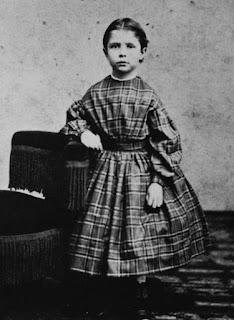
When Florence Kelly was twelve, her father took her to tour a glass bottle-making factory and a steel plant in Western Pennsylvania. He hoped she'd
appreciate the wonders of America's new industrial age. She did not. On a 2AM tour of the steel mill, she saw men working at a huge fiery cauldron that turned molten
crude iron into steel. She never forgot the "terrifying" sight of "boys smaller than myself" carrying pails of drinking water to the men.
Florence Kelley as a child. From Sklar, Katherine 'Notes of Sixty
Years: The Autobiography of Florence Kelley,' p. 22.
Likewise, in the bottle plant she saw young boys at work, called "dogs." In the dark, sweltering factory, a boy stood next to each glass blower in front of a furnace with the dull, and yet, dangerous job of cleaning and scraping bottle molds. Later Florence recalled thinking these boys were valued less than so many grains of sand in the molds. She never forgot her sense
"of the utter unimportance of children compared with products in the minds of the people whom I was among." Florence spent her entire life working to improve the lives of working women and children, including creating a type of boycott in the garment industry known as the white label. She helped found the
National Consumers League in 1889, calling on individual consumers to vote with their dollars.“To live means to buy, to buy means to have power, to have power means to have responsibility.”
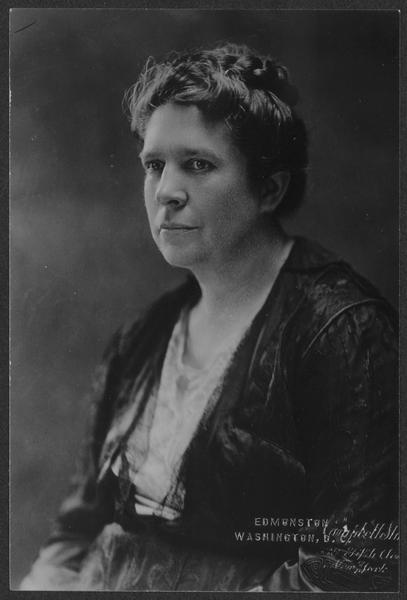
Florence Kelly, photo courtesy Library of Congress, Records of the National Woman's Party, circa 1910-1916. The National Consumers League (still alive today) established a Code of Standards for factories in an effort to raise wages, shorten hours, and require factories provide a minimum number
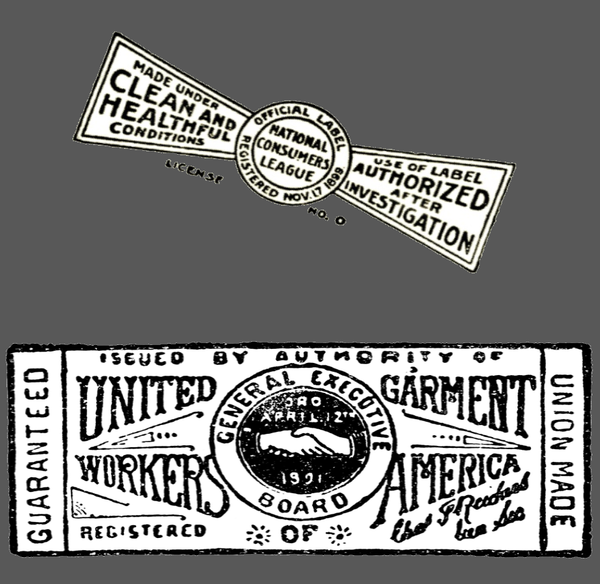
of bathrooms. They issued a white label to goods made in factories that met the standards. Seeing the white label on clothing told housewives items had not been produced by child labor, or under working conditions that
didn't meet labor safety laws. Frances explained how shopping the 'white label' in even one narrow field of manufacturing made an impact. "...that of women’s and children’s white stitched underwear, awards the use of its label to
manufacturers who employ no children below the age of sixteen years, give out no work to be done away from their own premises, employ no one longer than ten hours in one day, and obey the state factory law."
The
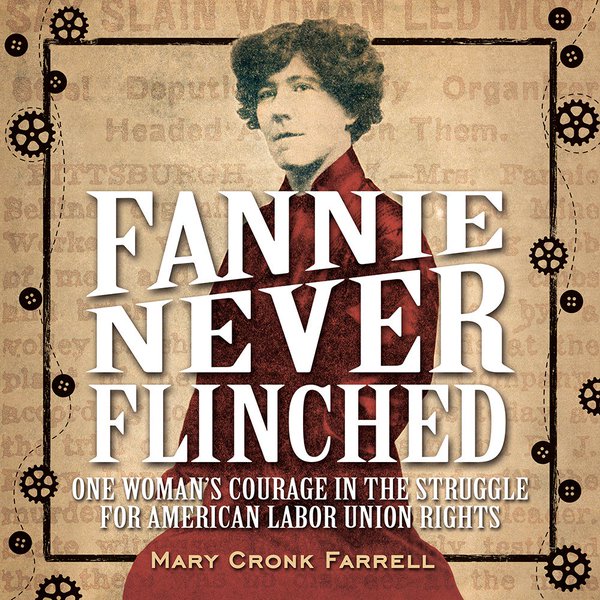
United Garment Workers of America had a similar label, during the late 19th and early 20th Centuries when a good number of activist women fought for the health and safety of women and children workers. My book about Labor Activist Fannie Sellins tells how she used a boycott to gain better pay and working place safety for sewing machine workers in St. Louis.
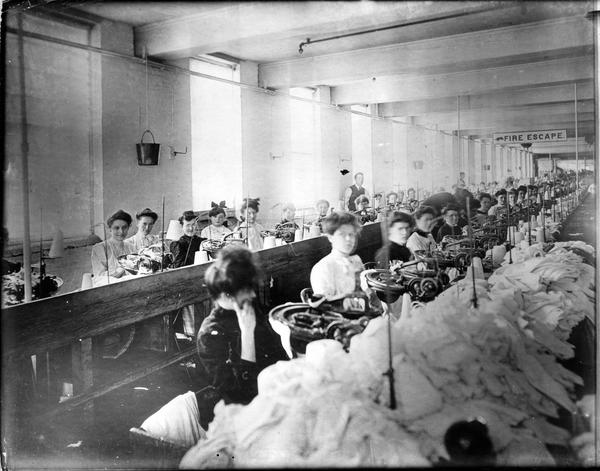
Women and girls at work at their sewing machines at the NYC Triangle Shirtwaist
Company before the tragic fire in 1911 that killed 129 girls and women, Brown Brothers photography. During a St. Louis garment workers strike against the Marx & Haas clothing company in September 1909, Fannie spoke at union halls across the country telling people
about the low wages and unhealthy working conditions. She asked for donations for the families of striking workers, but more significantly, she asked people to
buy only clothes with the “union-made” label. Those tags guaranteed the workers who made those shirts and pants received fair treatment. The company
lost so many sales, they had to close one of two factories. Eventually, Marx & Haas gave in to strikers' demands and agreed to re-hire union workers and raise their wages.
More
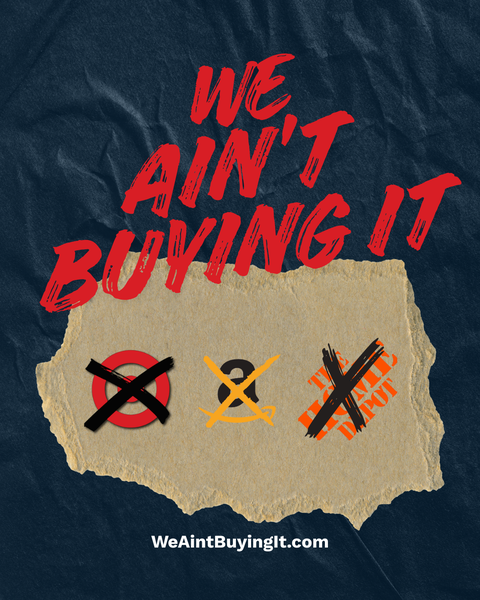
than one hundred years later, folks are once again asking Americans to boycott for social change. The We Ain't Buying it campaign runs today through December 1, and targets companies that are capitulating to the Trump administration and it harmful,
authoritarian policies, namely Target, Amazon and Home Depot.
Boycotters urge people to use their time and money to connect with loved one this holiday season and redirect
spending to local business or companies affirming humane values. And now we turn to big tech and my struggle to leave Facebook and Instagram. I'll be writing about
Meta, Mark Zuckerberg's company that owns Facebook and Instagram. But know that any other big tech social platform you can think of (Tik Tok, Snapchat, X, YouTube, Roblox) is playing the same game. A year ago, I decided to leave Facebook and Instagram due to Meta's scrapping much of its effort to limit misinformation on those platforms. I told all my followers and friends I was leaving. And then I stayed. I enjoy keeping in touch with family and friends on Facebook and Instagram and the platforms are useful in promoting the stories I write and signing up more people to read my newsletter each week.
For
awhile, I told myself that since I don't respond to the advertisers on social media, I'm not really supporting FB & Insta's profit margin. But that's not how it works. Every time an ad scrolls past my eyeballs, no matter if it's only half a second, ch-ching!Zuckerberg and his billionaire executives get
money. Why do I care? Here's a glimpse into how much Zuckerberg cares about the impact his company has on our children. Just now, a group of school districts, state attorneys general and individuals are suing Meta, TikTok, YouTube and Snapchat, alleging the social media giants have endangered teens and little
children. According to unredacted filings in the lawsuit: - Meta intentionally designed
its youth safety features to be ineffective and rarely used, and blocked testing of safety features that it feared might be slow business growth.
- Meta required users to be caught 17 times attempting to traffic people for sex before it would remove them from its
platform
- Meta recognized that optimizing its products to increase teen engagement resulted in serving them more harmful content, but did so anyway.
- Meta stalled internal efforts to prevent child predators from contacting minors for years due to prioritize business growth, and pressured safety staff to circulate arguments justifying its decision not to act.
- In a text message in 2021, Mark Zuckerberg said that he wouldn’t say that child safety was his top concern “when I have a number of other areas I’m more focused on like building the metaverse.”
- When Meta researchers found that by 2018, approximately 40 percent of children ages 9 to 12 were daily Instagram users — despite the fact that you are supposed to be 13 to join — some employees bristled at what they perceived as tacit encouragement from executives to accelerate growth efforts among children.
More recently, Meta shut
down internal research into the mental health effects of Facebook after finding causal evidence that its products harmed users’ mental health. A number of American parents are suing Meta after the suicides of their children. Meta denies these allegations. Despite my knowledge of this, I have not yet pulled the plug on my social media accounts. Why? I could give a lot of excuses,
like the local FB gardening group I joined this summer is really great. I haven't deleted my accounts, but I'm not really using them. Not that much, anyway. It's so easy to just go with the flow. But I really wish I would quit. My actions do not align with my values and I feel badly about it. Maybe this confession will move me toward wise action. What do you
think?
Like my article today? Forward this email to share with family and friends.
Sources https://weaintbuyingit.com/ https://www.aol.com/articles/lawsuit-alleges-social-media-giants-002642048.html
One last note about Florence Kelly, who must have been a woman of amazing energy and passion, with a finger in every pie. Starting college at
Cornell at 16, she was one of the first women to graduate there. She helped create the NAACP, served as Vice President of the National American Woman Suffrage Association and organized the National Labor Committee to end child labor. Living with Jane Addams in Hull House in 1893, Florence investigated sweat shops in the garment industry. She push through the Illinois Factory
Inspection Act, creating an 8-hour workday for women, and barring employment of children under 14. The State of Illinois appointed her the first women chief factory inspector and she suited companies who broke the law she helped pass.
Follow me on social media
This newsletter is a reader-supported publication. To support my work, consider becoming a paid subscriber.
Read
a great book? Have a burning question? Let me know. If you know someone who might enjoy my newsletter or books, please forward this e-mail. I will never spam you or sell your email address, you can unsubscribe anytime at the link below. To find out more about my books, how I help students, teachers, librarians and writers visit my website at www.MaryCronkFarrell.com. Contact me at [email protected]. Click here to subscribe to this newsletter. |
|
|