January 16, 2026 Hello , White nationalism fuels the violence of ICE. It's ignited by hate and lies. And it's almost as American as apple pie. Back in the 1920s, David Curtis Stephenson had enormous success recruiting mid-westerners to the Ku Klux Klan. He railed against Blacks, Jews, and Catholics and proclaimed.
“America must close the door to the diseased minds and bodies and souls of the peoples of foreign lands.” The current Republican Administration is recruiting ICE agents with a social media recruiting poster that says, “America has been invaded by criminals and predators. We need YOU to get them out.”
A cowboy reminiscent of the Marlboro Man gallops across a mountain valley in another ad, while a Stealth bomber flies overhead. The only text, “We’ll have our home again. Join.ice.gov,” features a phrase used by White nationalist groups in the US and Canada. In the 1920s, it took Stephenson only two years to become the Grand Dragon of the KKK covering 21 states.Then the deathbed testimony of one seemingly powerless woman implicated him on charges of torture and rape.
Death of One Woman Toppled the
Indiana Klan
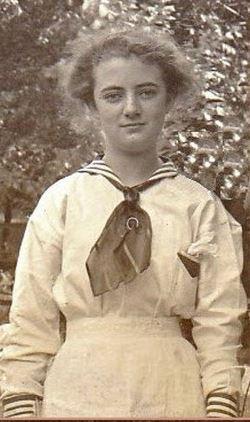
Madge Oberholtzer, a 28-year-old former teacher and employee at the Indiana
State Department of Public Instruction, met David Stevenson at the governor's inauguration party. She refused dates with him, but saw him professionally until attending a party as his mansion, after which she ceased all contact. Then one evening Stephenson said he had important business to discuss with her and sent a man to escort her to his home, only blocks from where she lived in Irvington, Indiana. Shortly after arriving, Stephenson and his associate Earl Gentry forced a drink on Madge leaving her weak and befuddled. Stephenson pulled a gun and pressured her into his car. Driving to the train station, he and Gentry manhandled the young woman into a private car on a train bound for Chicago.
Stephenson was a powerful man in Indiana. He hosted high society and political leaders at his mansion for lavish
parties. In the back room, ordering attacks on immigrants and punishing his opponents, flogging them or branding them with acid. Most police officers and many lawyers and judges had sworn oath to the KKK. As Grand Dragon, he believed he could get away with anything he wanted.
A minister who
criticized the Klan disappeared. Found several days later, unconscious, his back was branded with the letters “KKK”. “I want people to be afraid of us,” said Stephenson.
He also wanted personal loyalty. He helped political candidates get elected up and down the ballot, including Indiana Governor Ed Jackson and mayor of Indianapolis,
John L. Duvalla. Then he demanded they sign contracts pledging loyalty to him.
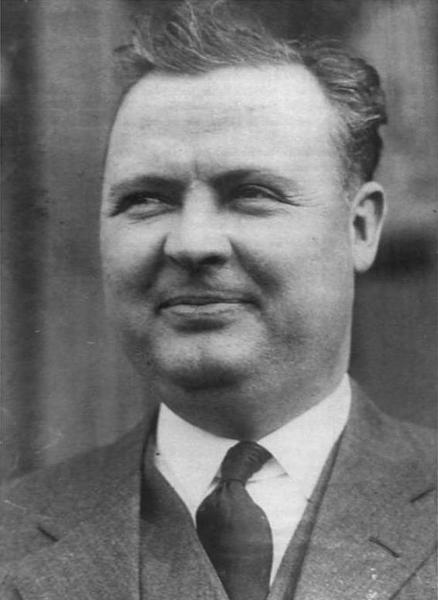
D. C. Stephenson, Grand Dragon of the Klu Klux Klan
in Indiana, c 1922, courtesy, IndyStar. Public domain. David Curtis Stephenson was the son of a Texas sharecropper with an 8th grade education. Joining the army, he spent much of WWI in Iowa, later bragging about courageous battlefield exploits in France. Taking a shine to Benito Mussolini, he studied the Italian leader's speeches, admiring Mussolini's ability to motivate people to hate
others. When Stephenson got Madge on the train, March 15, 1925, she had no escape. He was a ruthless sexual predator. In a statement made while she was dying, Madge described
what happened. "Stephenson took hold of the bottom of my dress and pulled it up over my head. I tried to fight but was weak and unsteady.
Stephenson took hold of my two hands and held them.... [He] took all my clothes off and pushed me into the lower berth. After the train had started, Stephenson got in with me and attacked me." The KKK leader's associate Earl Gentry stayed in the upper bunk and didn't
come to Madge's aid. The attack by Stephenson was brutal. “He held me so I could not move. I did not know and do not remember all that happened. He chewed me all over my body, bit my neck and face, chewing my tongue, chewed my breasts until they bled, my back, my legs, my ankles and mutilated me all over my
body."
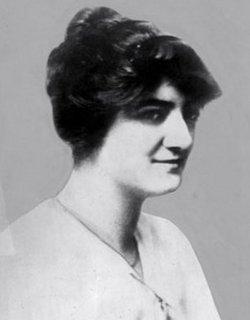
Madge Augustine Oberholtzer
The next thing she remembered was being
shaken awake the next morning to depart the train. Stephenson flourished his revolver.
I said to him to shoot me. He held the revolver against my side, but I did not flinch. I said to him again to kill me, but he put the gun in his grip." Madge told Stephenson he wouldn't get away with his crimes, the law would come after him. He laughed and said, "I am the law in Indiana." He coerced her to pose as his wife when they checked into a hotel. When he fell asleep Madge took his revolver and debated shooting herself. Fearing that would disgrace her
family, she plotted to poison herself. The next morning she insisted on shopping for a hat and makeup. Stephenson's chauffeur drove her to a drug store where she purchased a box of mercury bichloride tablets. Before antibiotics, this powerful poison was sometimes used to treat external infections. It was also a pesticide, and women sometimes used it to induce
abortion. Madge planned to take all 18 mercury bichloride pills, but they burned her mouth so badly, she only got six down. She quickly became very sick, vomiting blood. When Stephenson discovered what she had done, the men drove her back to Irvington, eventually taking her home and dumping her in bed while her parents were out looking for her. The family physician was called and her stomach pumped. But bruises covered her face, her kidneys were failing and her body had grown cold. “’I’m going to die,’ she told the doctor. ‘I’m … going … to … die.’ ” As her condition worsened, the family attorney advised Madge to make a "dying declaration" a statement made by a material witness facing certain death. After he transcribed her 333,000-word account of her attack, the doctor told her family she wouldn't survive. She died April 14th, a month after her assault by the Klan leader. Madge's dying declaration became pivotal in the trial of Stephenson and his associate
present during the assault.
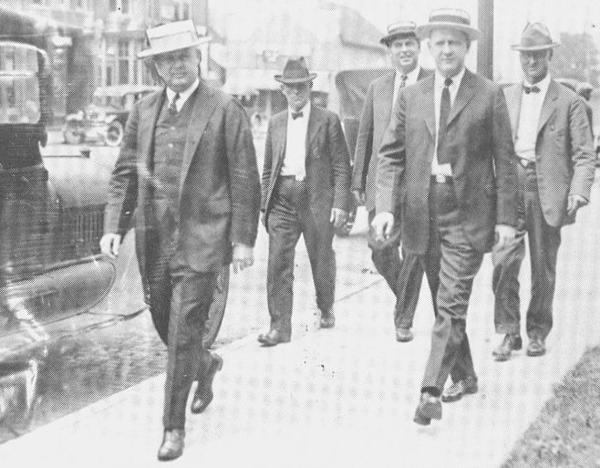
Defendants Stephenson (left) and Earl Gentry (front right) on way to bail bond hearing in June 1925 (Indianapolis Star photo) Though his Klan followers proclaimed his innocence, Stephenson was found guilty of murder in the second degree. Gentry was acquitted. The Klan boss was sentenced to life in prison and KKK membership plummeted, not just in Indiana but nationally, too. When politicians didn't pardon Stephenson as he expected, he named names of
officials who had accepted bribes and payments from the Klan. The state of Indiana indicted several high-ranking officials, including Governor Edward L. Jackson and the head of the Republican Party in Marion County. Other local officials resigned when facing charges. Unfortunately, Stephenson's brutality did not stop with his assault on Madge. After serving 25 years in prison, he was
granted parole but violated the terms and went back to prison. In 1956, he was released again, on the condition that he leave Indiana and never return.
In 1961, Stephenson was arrested in Tennessee at age 70 on charges of sexually assaulting a 16-year-old girl. Charges were dropped on grounds of insufficient evidence. He died five years later.
Egan says, D.C. Stephenson "discovered that if he said something often enough, no matter how untrue, people would
believe it. Small lies were for the timid. The key to telling a big lie was to do it with conviction.” Stephenson wasn't the first or last charlatan to understand this.
Egan calls D.C. Stephenson a "a drunk and a fraud, a wife-beater and a sex predator, a serial liar and an unfettered
braggart, a bootlegger and a blackmailer.”
Like my article today? Forward this email to share with family and friends.
Sources https://www.msn.com/en-us/news/us/the-us-government-seems-to-have-a-clear-message-for-white-nationalists/ar-AA1UgVLT? https://www.indystar.com/story/news/history/retroindy/2018/11/14/murder-madge-oberholtzer-rape-poison-and-kkk-d-c-stevenson/1978705002/ https://nypost.com/2023/06/10/how-one-brave-woman-took-down-a-power-hungry-ku-klux-klan-leader/
This week, I took a break from 2026 and traveled back to 1973 following a bicycle trek across the country. It was far out, man. Subscriber
David Reed wrote to tell me about his memoir Uphill and Into the Wind and I was able to get it from the library. The 1970s weren't particularly rosy with America torn apart by the Vietnam War and the National Guard shooting students at Kent State. The Watergate break-in and President Richard Nixon's impeachment and resignation. But there is a wholesomeness to the story of three young adults biking from the Garden State to the Golden
Gate. Reading about it was an antidote for the sadness, frustration and anger I feel about current events.
David and his friends Susie and Rusty see the country from the up-close vantage and slower pace of cyclists. They form strong bonds confronting the challenges of the road, weather,
bike break-downs and wild animals. David's writing is descriptive of plants, rocks and animals, big skies at dawn, sunsets and starry nights, mountains and plains, the whole country by back road. America of a bygone era.
Follow me on social media
This newsletter is a reader-supported publication. To support my work, consider becoming a paid subscriber.
Read
a great book? Have a burning question? Let me know. If you know someone who might enjoy my newsletter or books, please forward this e-mail. I will never spam you or sell your email address, you can unsubscribe anytime at the link below. To find out more about my books, how I help students, teachers, librarians and writers visit my website at www.MaryCronkFarrell.com. Contact me at [email protected]. Click here to subscribe to this newsletter. |
|
|