January 23, 2026 Hello , Women were essential to success in the 1934 Truckers Strike in Minneapolis, one of the most violent labor actions in Minnesota history. Two workers were shot dead by police and 67 injured. The sacrifice of these workers led to one of the most important labor actions in
American history: congressional approval of the National Labor Relations Act and the Fair Labor Standards Act. The law guaranteed workers in the United States the right to organize unions and bargain collectively. Totally watered down over the decades, workers' rights
have taken a huge hit under the current Republican Administration, especially regarding the Department of Government Efficiency. But hey, Minnesotans are rising again, united and demanding their rights. Today, January 23, look out for ICE Out For Good a statewide day of nonviolent moral action, reflection: no work, no school, no shopping — only community, conscience, and collective action. A hundred years ago, most unions did not welcome women. Today in Minneapolis unions welcome all genders and put
up a fierce fight for the safety of their neighbors.
Not Minnesota's First Time On the
Battlefield
The strike started May 16, 1934 and brought all trucking in Minneapolis to a standstill. Truck drivers demanded recognition of the union, wage increases,
shorter working hours, and the right of the union to represent “inside workers,” such as warehouse and loading bay workers Other workers joined the
Teamsters Within ten days employers appeared to accept strikers' conditions and they returned to work. But companies didn't comply with the agreement and fired hundreds of
union members. The Teamsters went back on strike July 17 and were joined in solidarity by others in the city, including 35,000 workers in the building trades Three days
later, the most violent episode of the strike took place. Law enforcement men in a truck posing as scabs enticed a crowd of strikers to a street corner where 100 police
officers lay in wait.
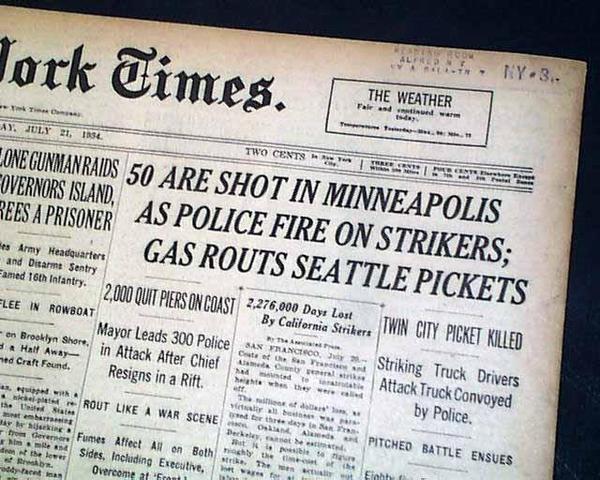
Police shot and killed two picketers, John Belor and Henry Ness, and wounded 65 other workers. The violence stunned the city's working class. A
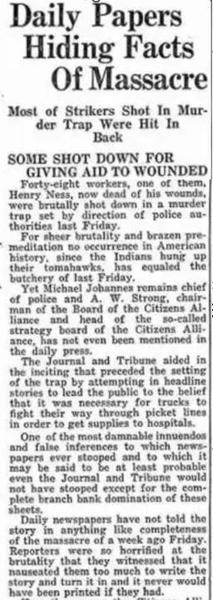
public commission set up after the strike later testified that “Police took direct aim at the pickets and fired to kill. Physical safety of the police was at no time endangered. No weapons were in possession of the pickets.” Many workers were shot in the back. Henry Ness’s funeral drew 100,000 people, leading the governor to declare martial law and deploy 4,000 National Guardsmen. Picketing was banned and strikebreakers given military permits to operate trucks. To the Teamsters, this looked a lot like strikebreaking. They protested and vowed to picket despite martial law. The regular newspaper lacked full and honest coverage.
The Friday, July 27, 1934 edition of the Minneapolis Labor Review.
Minneapolis Labor Review
On July 31, the National Guard raided the union headquarters and arrested strike leaders, but union members organized a rally of nearly 40,000 people,
successfully regaining their leaders and headquarters.
The strike ended on August 21 with employers and the Citizens Alliance agreeing to most union demands, breaking longstanding opposition to union organization in Minneapolis.
A writer from the Minneapolis Labor Review reflected on the event, noting: “The winning of this strike marks the greatest victory in the annals of the local trade union movement … it has changed Minneapolis from being known
as a scab’s paradise to being a city of hope for those who toil.”
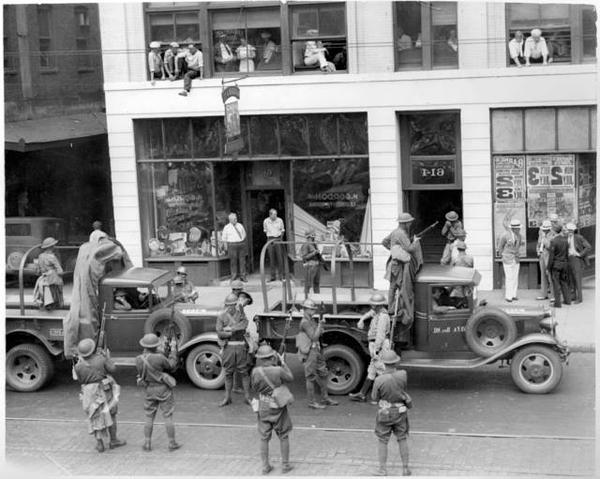
The National Guard raided offices of the Central Labor Union in Minneapolis and arrested strike leaders,
August 1, 1934. Image courtesy Minnesota Historical Society. The forces at work when Bloody Friday threatened to tear Minneapolis apart in 1934 are the same
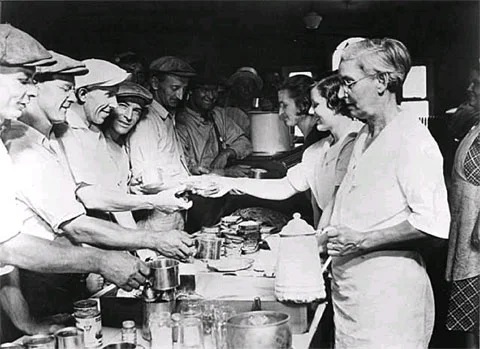
that menace the Twin Cities today. Billionaires line up to appease President Trump and enjoy tax cuts while the rest of us taxpayers fund the army of ICE agents terrorizing neighborhoods in the Twin Cities. Back in 1934, striking truckers faced the Citizens Alliance, a group of wealthy businessmen and politicians who supported law enforcement in breaking unions for decades. "[The Citizens Alliance] got the banks to commit that if you were a business and you wanted a loan from the bank, you could not be in a union contract,” said Peter Rachleff, a labor scholar and retired professor at Macalester College in St. Paul, MN. When Teamsters decided to strike in 1934, they prepared ahead for the fight. Besides an organizing committee directed day-to-day issues, including flying pickets, a huge fleet of cars and trucks patrolled the city to deter vehicles driven by scab labor from delivering goods. A Women's Auxiliary of female supporters, wives of strikers and even unemployed women worked out of union headquarters. They demonstrated daily at City Hall, beefed up picket lines, fed strikers, ran a food
pantry for families and a small hospital for those injured during the strike.
The Women's Auxiliary supported all headquarters operations and was considered essential to the strike’s
success. Photo courtesy Teamster's Union. Though women were traditionally sidelined in the labor movement, at the end of WWI,
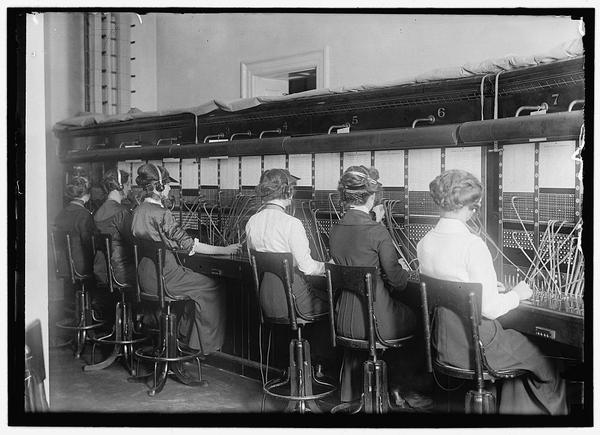
Minneapolis telephone operators showcased women's leadership, highlighted their activism and paved the way for progress in workers' rights and gender equality in the Twin Cities.
Women at work at the telephone switchboard, 1914-1917. Location unknown. (Library of Congress) Today in Minneapolis, it's often women leading the charge for greater equity, fairness and safety. Chelsie Glaubitz Gabiou, the first woman ever elected President of Minneapolis Regional Labor Federation, has lead the organization for ten years.
Bernie Burnham elected President of the Minnesota AFL-CIO in 2022, is a Pacific-Islander and the first person of color to lead the Minnesota AFL-CIO. Growing anger exploded, January 7, when ICE agent Jonathan Ross shot and killed poet and mother Renee Nicole Good in Minneapolis. A week later, another agent shot a Venezuelan immigrant in the leg. ICE agents have used pepper spray on protesters and set off tear gas under a family’s car, knocking out a baby in his car seat. Trump’s administration has stepped up attacks on Somali, Latino, and Asian communities—breaking into homes, raiding and shutting down small businesses, following school buses, using tear gas near schools, and surrounding hospitals. Under siege, a rainbow of Minnesotans, women, men, trans...all genders unite to end the terror.
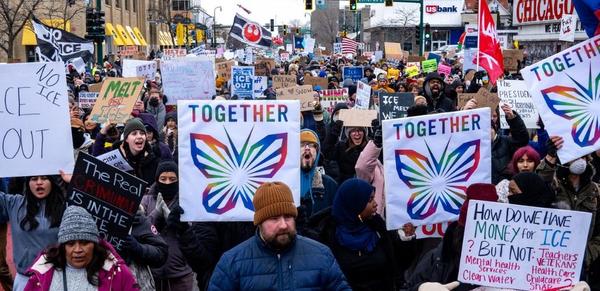
The momentum is growing from mass protests, like this one in downtown Minneapolis on January 10 that
drew 10,000, and building on long-term organizing. Photo: Brad Sigal Labor federations, faith groups, community organizations and many
other groups call for a statewide day of nonviolent moral action, reflection: no work, no school, no shopping — only community, conscience, and collective action January 23. “We are not going to shop. We are not going to work. We are not going to school. For some people they call that a strike,” said JaNaé Bates Imari of Camphor Memorial United Methodist Church at a press conference on Tuesday. “For many of us, this is our right to refusal until something changes.”
Under the banner “ICE Out of MN: Day of Truth and
Freedom,” courageous people of Minnesota are demanding for ICE to leave the state, for the officer who killed Good to be held legally accountable, for no additional federal funding for ICE, and for businesses to sever any economic ties with the federal agency.
Across the country people are turning our in solidarity with the people of Minnesota, staging prayer vigils, protests and community action. Find one near you here.
Like my article today? Forward this email to share with family and friends.
This newsletter is a reader-supported publication. To support my work, consider becoming a paid subscriber.
Read
a great book? Have a burning question? Let me know. If you know someone who might enjoy my newsletter or books, please forward this e-mail. I will never spam you or sell your email address, you can unsubscribe anytime at the link below. To find out more about my books, how I help students, teachers, librarians and writers visit my website at www.MaryCronkFarrell.com. Contact me at [email protected]. Click here to subscribe to this newsletter. |
|
|