January 30,2026 Hello , This week people around the world marked International Holocaust Remembrance Day, remembering the six million Jewish victims of the Holocaust and the millions of other victims of Nazi persecution. It was January 27, the anniversary 81st anniversary of the liberation of Auschwitz-Birkenau. In that spirit, I introduce you
to a survivor of the Holocaust living right in my own backyard. Not literally, but Carla Olman Peperzak does live in my city, Spokane, WA. Carla not only survived, but as a teenager working under the noses of the Nazis, she saved the lives of roughly a hundred Jewish people. Carla doesn't call herself a hero. She doesn't see herself as unusually brave. Her resistance to the
cruelty of authoritarianism was born of gratitude. Under Nazi rule, Carla had the privilege to walk freely about the streets because of an accident of birth. She did not have to wear the yellow star, so she helped those who did. For half her life, Carla never talked
about what she witnessed during WWII in Amsterdam. It was too painful. She tried to forget it. Now, at age 102, she tells her story as often as she can.
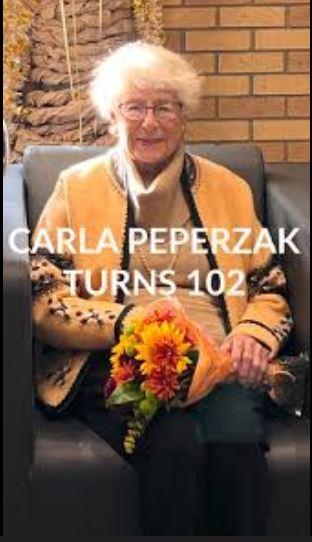
Carla celebrates her 102nd birthday, November 2025, at Carla Olman Peperzak Middle School in Spokane, WA. You can learn Carla's story in a new documentary or read the autobiography she wrote for children. The links are below in the News and Links section. Here's my quick version for you!
Holocaust Survivor Carla Peperzak Shares Her Incredible Story
Carla was sixteen when the Germans invaded The Netherlands where she lived in the
Amsterdam neighborhood the world knows today at Anne
Frank's neighborhood. She attended synagogue with the Frank family and went to Hebrew school with Anne's sister Margot. Unlike Anne and most of their neighbors, Carla escaped the Nazi round ups. Her mother wasn't born Jewish, but adopted into the faith. As the cruelty of the Germans unfolded, Carla joined the Dutch resistance, sometimes posing as a German nurse. Trains packed with Jews passed through Amsterdam's Central Station. One day Carla got word her aunt and five cousins would be on a train traveling to Westerbork. She didn't know what happened to the Jews in Westerbork, but she knew it was bad. Carla dressed in her blue and white
nurse's uniform, went to the train station and looked for her relatives. The Nazis had already taken her uncle and she didn't know what she could possibly do to help the rest of the family. But she found them. With her aunt's permission, Carla lifted her youngest cousin off the waiting railroad car and walked away with him. But the station crawled with Nazi soldiers and two of them
confronted her demanding to know who she was and where she was going.
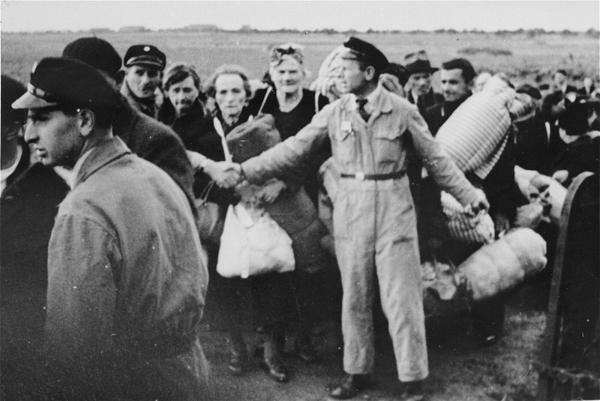
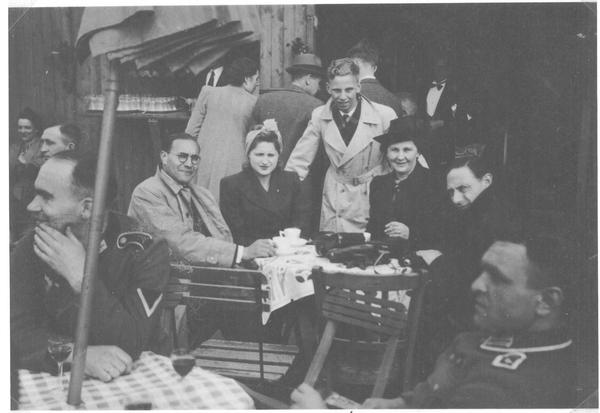
Arrival of a transport at the Westerbork camp. Westerbork, the Netherlands, October 1942. Members of the
Ordedienst, the Jewish Police in Westerbork, direct an arriving transport of Dutch Jews into the camp. The policeman in the center is A. Schoenfliess.
Credit: US Holocaust Memorial Museum
What was Westerbork Camp?
Westerbork camp was initially established by the Dutch government to house Jewish refugees who had entered the country
illegally. After invading, the Germans made it a transit camp for Jews they deported from the Netherlands during World War
II to killing centers in Poland.
Holland had one of the highest Jewish death rates of Western Europe in World War II. Roughly a quarter – about 35,000 of approximately 140,000 Jews – survived. More...
Before the Germans invaded Holland in 1940, Carla's life was that of a normal teenager, going to school and having fun with her friends. She
was athletic, played field hockey, went ice skating when the canals froze in winter, and in summer sailing on the Amstel river. Her rowing club was mostly Jewish, a half-dozen athletes would be swept up in a Nazi raid.
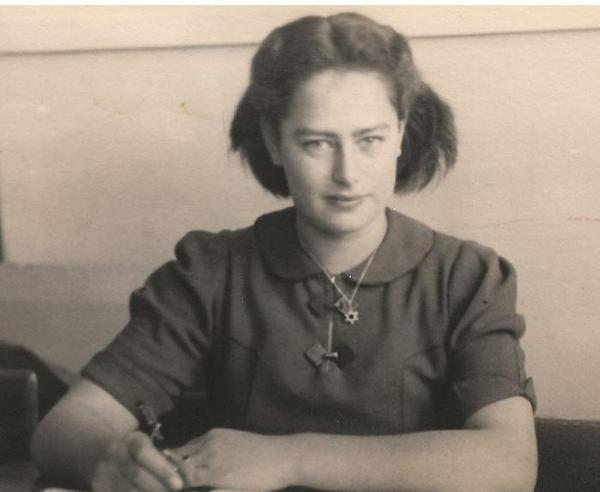
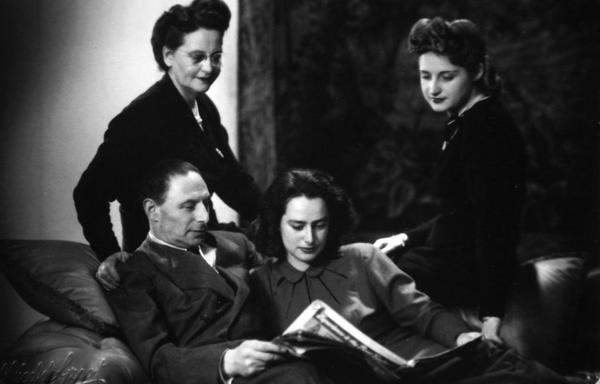
Carla Olman Peperzak as a teen in Amsterdam. Carla's mother did not have Jewish blood, so early on her father was able to get IDs
changed for her, Carla and her sister Miep. With the "J" removed from their papers they had a layer of safety. Carla's father, who owned a clothing and fur factory, was forced to wear the yellow star. He was seized by the the Nazis and held for three days. Perhaps money changed hands. He was released, but never spoke of those three days.
By 1942 Carla was training to be a medical technologist, working her practicum in an Amsterdam hospital. This gave her the chance to steal a German nurses uniform and ID which she used on missions for the Dutch resistance. Carla helped hide 40 people and forged
papers for another 60. “I was 18, 19, 20. I was not married. I did not have any responsibility–only for myself–and that
made a big difference...I felt I could help. I had the opportunity.” She found places for Jews to hide, attics, basements, crawl spaces and barns, mostly in the Dutch countryside. She hid an aunt, uncle, and two cousins in a farmhouse saving their lives. She took responsibility for the people she concealed, bring them food, medicine, and stolen rations cards, sometimes bicycling for hours, other times traveling by train. Carla's other resistance work included creating fake identification papers and ration cards, running messages, and using a contraband mimeograph machine to help publish an underground
newspaper. “You were always scared,” Carla says. “You were so careful about what you said. If you saw a German soldier you walked around the block.”
Carla's work was dangerous. German soldiers stopped her during at least three of her missions. The first time was at the train station as she was whisking away her 2-year-old
cousin. Another time she trying to get back home before curfew. While biking in the countryside one day, she was stopped while carrying a thumbprint-making machine and a stack of fake identification papers. If the Nazis had discovered her contraband or true identity any one of these times, Carla says: “That would have been the end of me.” While rescuing the toddler from the train to Westerbork, Carla answered the soldiers' questions in her best German, which she had learned in school and a German speaking Nanny. She told them the boy was sick and needed to go to the hospital
and she had legitimacy in her nurse's uniform and fake German ID. Like many other young women in the Nazi resistance, she had youth,good looks and resourcefulness to work with. Each time she was stopped, Carla says, “I got myself out of it by flirting and by talking. I was very fortunate to be that age. I’m sure if I had been 30 I wouldn’t have
gotten away with it.” To protect family members, Carla never told her parents or Miep about her activities. “The less you knew, the better off you were....you didn’t say anything.” After the war ended, Carl met and married Paul Peperzak, who got a
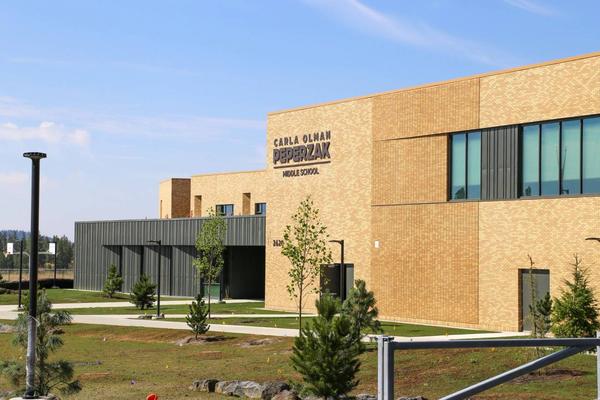
job with the United Nations. After living many around the world, she moved to Spokane in 2004, a few years after her husband died. Carla has shared her story at events across the country, but schools are her favorite place to talk. In 2023, the Spokane School District built a new school and welcome sixth and seventh graders to Carla Olman Peperzak Middle
School.
Carla Olman Peperzak Middle School, 2023, Spokane Public Schools via Facebook About 75 percent of Carla's extended family were killed by the Nazis, including three of her father's six sibling and the aunt and cousins on the train. "[Her] revenge against the Nazis was that she had a family," says Clement Lye, who helped produced the documentary on Carla's life. "They didn't want her to exist. But now she's got 54 members in her family." See the trailer here... At 102, what is Carla's message? She says be hopeful and
believe in the goodness of people. "Hate is so ruthless, so awful. We need to get rid of hate. A person does not need to love everyone, but we need to respect people." What part does each of us play in preventing another genocide? Producer of the documentary Carla the Rescuer, Dr. Kristine Hoover says that Carla shows us. We don't have to be heroes. We just need to be human. Like my article today? Forward this email to share with family and friends.
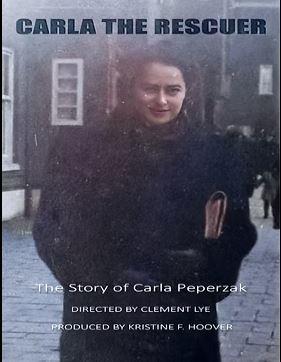
The documentary - Carla the
Rescuer - follows Carla Olmon Peperzak's life from 1923 Amsterdam to the 2023 dedication of Peperzak Middle School in Spokane. The producers agreed to her stipulation that it be educational, and that nobody profits from the film. "I don't want a penny of profit because I don't want to take
advantage of the Holocaust," Carla said.
The film is narrated by Carla and the four generations of her family, including grandchildren and great-grandchildren. I'm planning to watch it tonight! on the channel Stash – War and Military or YouTube: https://youtu.be/H-B-XumgzII?si=U6peuHJMQtuaKnHd
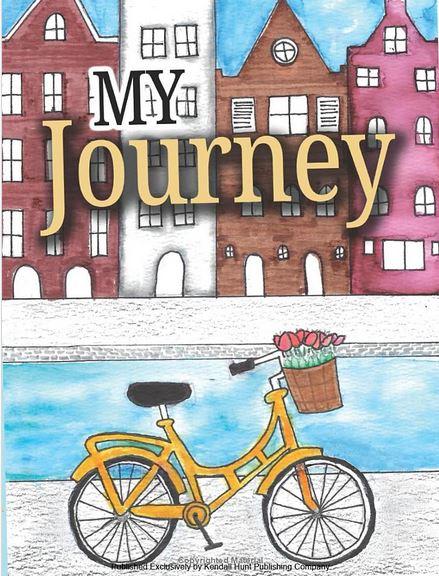
Carla Olman Peperzak's autobiography for young people has five starts at Bookshop.org.
If your library doesn't have this book, go ahead and request it. Until next week...
Follow me on social media
This newsletter is a reader-supported publication. To support my work, consider becoming a paid subscriber.
Read
a great book? Have a burning question? Let me know. If you know someone who might enjoy my newsletter or books, please forward this e-mail. I will never spam you or sell your email address, you can unsubscribe anytime at the link below. To find out more about my books, how I help students, teachers, librarians and writers visit my website at www.MaryCronkFarrell.com. Contact me at [email protected]. Click here to subscribe to this newsletter. |
|
|