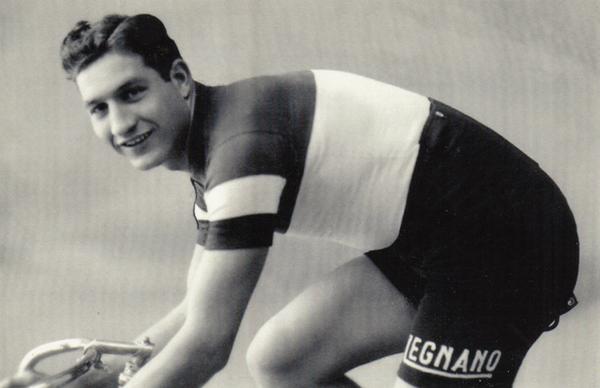
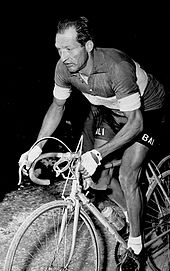
February 20, 2026 Hello , As the Milano Cortina Olympics draw to a close, let's remember a famous Italian athlete who stood up to fascism and risked his life to save the lives of others. Like many celebrities, cyclist Gino Bartali has become an heroic and almost mythical figure, stories of his wartime daring rivaling his racing
victories. However, fiction often reveals truth and if the man behind the myth isn't quite as extraordinary as proclaimed, he's further evidence that we "ordinary" people are capable of risking our comfort and safety to resist illegitimate and immoral authority. “Good is something you do, not something you talk about," said the Champion Cyclist Gino Bartali. "Some medals are pinned to your soul, not to your jacket.”
Speed, Endurance and the Courage to Defy Mussolini
When Gino Bartali carried away the 1938 Tour de France, Mussolini's sports minister, General Antonelli,proclaimed him a god. But Gino was a man of the people and the people loved him. For most of his life, he lived in Florence just five kilometers from where he was born. "I have never seen a sports hero so adored. I remember times when Gino could not get out of a hotel even, such was the crush of fans waiting to see him," said René de Latour
was a Franco-American sports journalist. "All the time there would be the roar of shouts which he knew so well, which was really music in his ears: ' Gi-no, Gi-no, Gi-no... '"
Gino Bartali became known as the Lion of Tuscany, 1936. Gino Bartali grew from humble beginnings in rural Tuscany, his father a day laborer, his mother a lace maker. At age 11 he rode a bicycle to school in Florence from his village Ponte a
Ema. With his brother Giulio he cycled up to Piazzale Michelangelo to appreciate the stunning domes of Florence, dreaming of one day becoming a champion. Wheeling through Tuscany, Gino developed a heart for tackling mountains. He quit school, got a job as a mechanic in a bicycle shop and won his first race in 1931 at
seventeen.
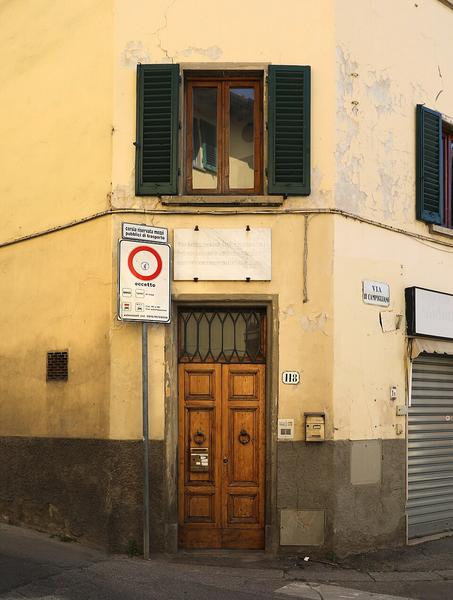
The house where Gino Bartali was born in Ponte a Ema, Florence. Photographer Francesco
Bini. Bartali started riding professionally in 1935. In 1936 and 1937, he won Italy's version of the Tour de France, the Giro d'Italia. Then Gino cycled onto
the world stage, at 24, wining the 1938 Tour de France. But back at home in Italy, Benito Mussolini tried to turn Bartali's win into propaganda for his fascist
agenda. Italy introduced racial policy that year to exclude Jews from education and employment and Mussolini tried to claim Gino as proof Italians were part of the master race. In a risky move, the cyclist refused to go along with the fascist dictator, remaining silent in the face of the dictator's praise.
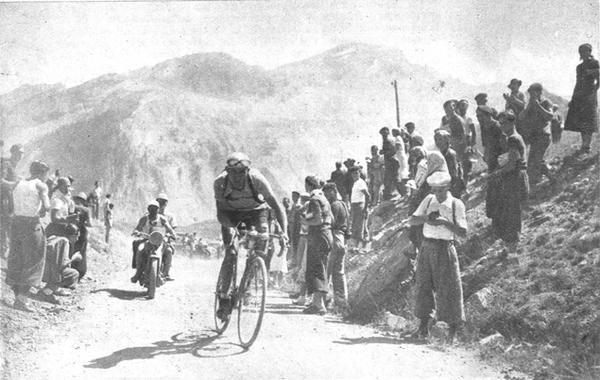
Gino Bartali (1914-2000) Italian cyclist, king of the mountain in the 1938, on his way to victory in the Tour de France. Unknown photographer World War II sidetracked Gino's cycling career. Germany occupied Italy in 1943 and the Nazis started shipping Italian Jews to concentration camps and he was contacted by a network helping Jewish refugees and Italian Jews hide or get out of the country. Bartali's used his celebrity status to work with partisans and plan a scene greeting fans and signing autographs at the railroad station. Photographers and cycling fans distracted soldiers and guards from their posts so Jews could board the train and hide until they reached the free south. At bigger risk to his life, Bartali agreed to become a courier. Under the guise of long training rides and wearing an Italian racing jersey, Bartali risked his life transporting photographs and counterfeit documents in the hollow frame and handlebars of his bicycle. The photos and documents provided Italian Jews with false identity cards
to protect them from the Nazis. People caught helping Jews evade capture were often executed immediately. Bartali has been credited for saving hundreds, even thousands of Jewish lives riding thousands of sometimes brutal miles with only emergency tools for the bike, traveling from Florence through Tuscany, Umbria, Marche and as far as
Assisi. Some historians say Gino's role as a courier cannot be confirmed, and even if so, these numbers have been inflated to mythical proportions. More on the controversy below, but first, meet one Jewish family Gino hid in his cellar and helped escape the Holocaust.
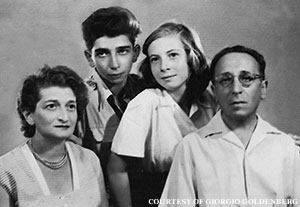
Gino Bartali’s Jewish friend Giacomo Goldenberg with his
wife, Elvira, and their two children Giorgio and Tea. Photograph Road to Valor book. After the first Nazi raid in his village, Giacomo Goldenberg and his family fled to Florence and a Gentile friend, Gino Bartali who owned an apartment in the city. He took Giacomo, his wife Elvira and their two children Giorgia and Tea down to hide in his basement. “The cellar was very small," Giacomo's son Giorgio said later. "A door opened onto a courtyard, but I couldn’t go out because I risked being seen by the tenants of the adjacent buildings. We slept four in a double bed: me, dad, mom, and my sister Tea. I don’t know where my parents found food...” In a deposition before Commission of the
Righteous Among the Nations, Giorgio testified he owed his life to Bartali. In 2013, Yad Vashem awarded Gino Bartali the honor Righteous Among the Nations In 2017, Tablet, an online magazine about Jewish life and identity published an article questioning the stories about Gino Bartali's contributions to the network supplies Jews with counterfeit IDs. "Bartali never claimed to have been a rescuer, nor did any of the organizers of the Italian rescue networks mention him. Historians have kept silent on the matter: None of the scholars in the field have so far endorsed it. "In the absence of reliable research, curators and institutions who present portrayals of Bartali as a rescuer of Jews to their audience, have little to rely on except for the enthusiasm of the press and the endorsement of colleagues." Sergio Della Pergola, a member of the committee of the Holocaust Museum says researchers are meticulous in checking the evidence gathered by Yad Vashem and stands behind it. "That Bartali may have saved eight hundred Jews could even be an exaggeration: we cannot prove the number. However, we have documented at least thirty saved. That was enough." A diary found after the death of Giorgio Nissim, a Jewish accountant involved with the network in Tuscany, appears to corroborate Bartali's partisan activities. It noted he left Florence in the morning on pretend training rides to Assisi where Franciscan convents sheltered a large number of Jews. He picked up their photographs and rode back. Whatever Bartali was doing, his long rides became suspicious in 1944 when most bike races were cancelled. In July, he was arrested and interrogated at Villa Triste (Sorrow House) in Florence, where local Fascist officials questioned and tortured prisoners. Fortunately, one of
the interrogators had known Bartali before the war and convinced the others he should be let go.
When the war was over, Gino went back to racing, racking up a third career victory in the Giro d'Italia in 1946. Then he shocked the cycling world by returning to win the Tour de France again, ten years after his
first victory. No other cyclist has achieved that feat. In addition, Gino won three consecutive mountain stages of the 1948 Tour de France (13, 14 and 15) That is one of the most amazing feats in
the history of road bike racing and it has never been equaled. After sustaining injuries in a road accident, Gino Bartali retired from cycling at age 40. The
stories of his WWII efforts helping Jews escape with their lives did not come out before his death in 2000. When asked by another reporter to recount his greatest
victory, Gino said, “I won the challenge of life, winning the love of the people.”
Like my article today? Forward this email to share with family and friends.
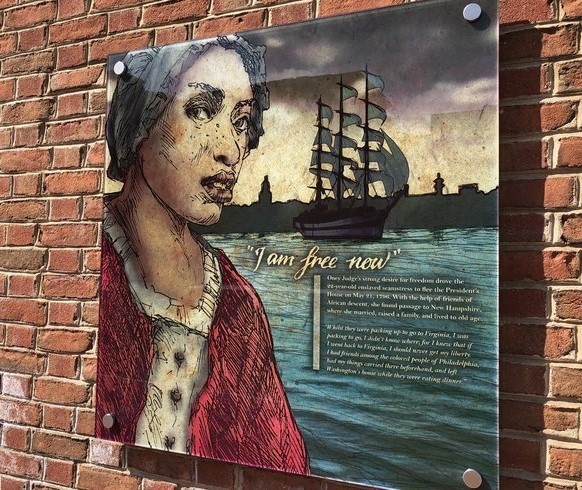
Good news! This week a federal court the National Park Service to reinstall exhibits highlighting enslavement at the President’s House
in Philadelphia.
The court’s 40-page decision explains that the Trump administration’s removal of the exhibit—without the city’s consent—violated federal law and agreements that date back to Congress’s
creation of Independence National Historical Park in 1948 to preserve for the benefit of the American people significant historical structures related to the nation’s founding.
Follow me on social media
This newsletter is a reader-supported publication. To support my work, consider becoming a paid subscriber.
Read
a great book? Have a burning question? Let me know. If you know someone who might enjoy my newsletter or books, please forward this e-mail. I will never spam you or sell your email address, you can unsubscribe anytime at the link below. To find out more about my books, how I help students, teachers, librarians and writers visit my website at www.MaryCronkFarrell.com. Contact me at [email protected]. Click here to subscribe to this newsletter. |
|
|