February 27, 2026 Hello , Milada Horáková, a defender
of democracy, survived five years in Nazi prisons, then after WWII came home to help rebuild a constitutional government in Czechoslovakia. But soon, Joseph Stalin's
cruel authoritarian regime grabbed up the Czechs and once again this courageous woman risked everything in the non-violent defense of human rights and democratic ideals. A
second time, Milada asked herself, how much she was willing to give in the fight to preserve freedom for her people and future generations? Having escaped the death penalty
once, did she dare tempt fate again? Or did she accept that a brutal death awaited her? We don't know what went through her mind, but Milada Horáková stepped away from her
daily comforts, cherished family routines and successful career. She threw her heart and soul into resisting fascism.
She Fought Two Totalitarian Regimes
The years between WWI and WWII were a heady time for intelligent young women in Europe. They went to college, some earning advanced degrees. Socialist
thought spawned campaigns for women's rights, child welfare, democratic reforms and anti-militarism. A formative moment for 16-year-old Milada Horáková, came in October 1918
with the collapse of Austria-Hungary and formation of a new independent country of Czechoslovakia founded on ideals of democracy and self-determination. There's a story that
she was expelled from school as a teenager for taking part in an anti-war protest. It may be more fiction than true, but there's no doubt the young woman was engaged in the events of her time. Milada continued her education and studied for law degree at Charles University in Prague, where she joined the women's movement, later traveling half of Europe to educate herself on women's issues.
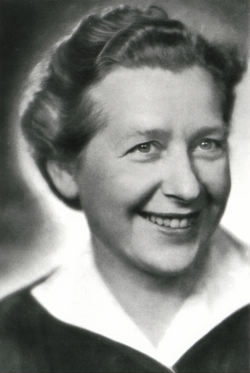
Milada Horáková, Czech lawyer, politician, fighter for
women's rights and resister against totalitarianism. Date unknown. Public domain. Throughout the 1930's, Milada built a career
combining her legal practice and social work to promote the welfare of women and children. She continued to fight for equal rights for women and became known for her intelligence, personal integrity, and the ability to speak about issues in a forthright and convincing manner. She believed voting and a representative Parliament alone would not preserve a healthy democracy, but that everyday people had to live the ideals in their daily life. She married an agrarian economist, Bohuslav Horák, and in 1933 welcomed their daughter Jana. But a dark shadow was rising over Europe and March 15, 1939, Nazi troops marched in Czechoslovakia. It had been the only central European country to remain a parliamentary democracy since WWI. And now it was gone. Swastikas flew over the historic Prague Castle, once the seat of power for kings of Bohemia, Holy Roman emperors, and presidents of Czechoslovakia. The Gestapo set up office in the very heart of the capital. Many people fled the Nazis, but Milada remained.
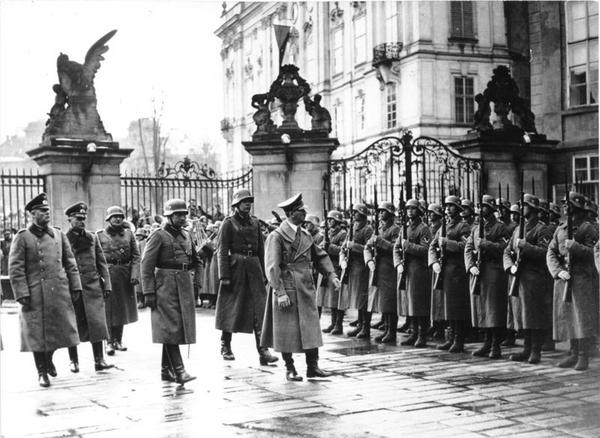
Nazi forces at Prague Castle on March 15, 1939. She and her husband joined the underground resistance finding secret housing for illegals and aiding espionage agents. On August 2, 1940, Milada and her husband were arrested. Although the Nazis used brutal interrogation methods, she did not reveal any information For a time, authorities held her and her husband in the same prison but didn't allow them to see each other. Then she was moved to various prisons in Germany for the next four years. Finally, she went to trial in the summer of 1944, where she defended herself against the death penalty and was sentenced to 8 years in prison. United States forces advancing into Germany in April 1945 freed Milada from a concentration camp. Her husband had also survived the war and they returned to Czechoslovakia where she rolled up her sleeves to rebuild democracy, winning election to
the Czech Parliament.
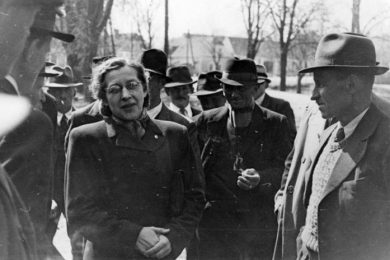
Milada Horáková in Czechoslovakia after
WWII. Milada used her political power to back social policy, education, and women's issues and tried to strengthen ties with Western nations,
but the Soviet Union gained increasing control in Eastern Europe. Joseph Stalin's administration in Moscow heavily influenced the communist party in Czechoslovakia and Milada spoke out against this encroaching power. In early 1948, the Communists consolidated power by controlling the police, arresting opponents, and taking over key government and media positions. On February 25, Communist-backed militias filled the streets of Prague and other cities. The party seized power in a coup, established a Soviet-aligned regime, and destroyed all remnants of democracy. Again, many politicians fled when faced with a brutal totalitarian government, but Milada did not leave and she did not go silent. Even as she came under increasing surveillance she continued her public work and spoke up, an uncompromising voice against government
restrictions on political freedom.
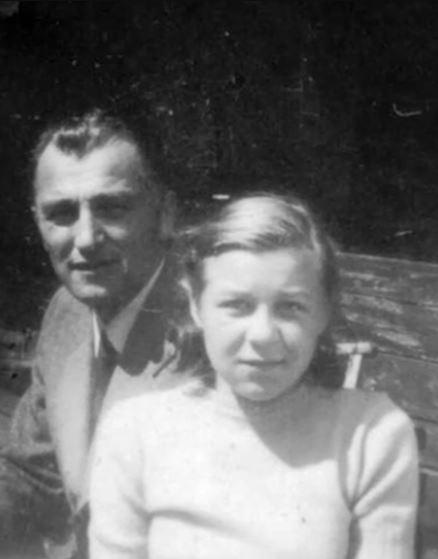
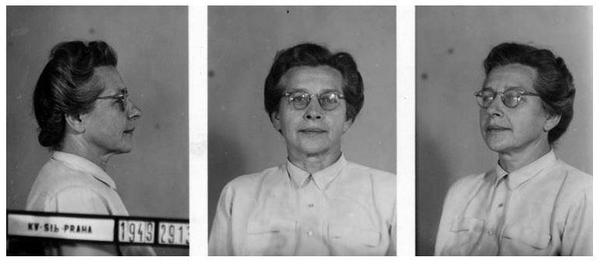
Bohuslav Horák and Jana. On 27 September 1949, she was arrested on false charges of leading a plot to overthrow the Communist regime. Her husband, Bohuslav Horák,
escaped to West Germany and later moved to the United States. Their daughter, Jana, aged 15, was not targeted and was taken in by her aunt. With advisors from Moscow,
authorities made plans for a show trail that would seal Milada's fate and orchestrate a nationwide atmosphere of fear, hatred, and outrage to legitimize their power.
After
arrest, Milada and 12 male defendants spent nine months in prison where they were subjected to physical and mental torture. For instance, forced into tiny room little over one square meter, with no heat, light or food for days until exhausted, starving and emotionally disoriented, they were willing to confess to anything. “The key line in the investigation was to make the defendants confess at all costs, even though we did not receive any material at all or material that was completely worthless from the interrogators. When I raised an objection, I was told by advisers... that the best material were the defendants
themselves and that all it took was to know how to deal with them.” Testimony of former State Security investigator Bohumil Doubek (August 30, 1955) The
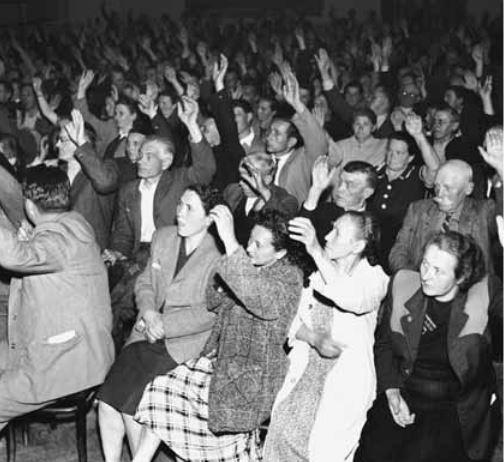
first major Stalinist show trial in Czechoslovakia began on 31 May 1950. A massive propaganda campaign in film, on radio, and in print publicized the eight-day trial. Public
meetings in factories, villages, and town squares fed citizens facts about these “enemies of the state,” coercing workers and students to sign resolutions filled with terms like “traitors,” “spies,” “vermin,” and “monsters of our society.” "The voice of the people” called for the harshest possible punishments.
One of thousands of displays of the alleged “will of the people” — the citizens of Čakovice vote June 2,
1950 for the punishment of “traitors” and “spies.” Historian Jan Adamec explains,“The
aim of the show trial was essentially to identify an enemy, to turn them into a scapegoat, and to intimidate not just opponents of the regime, but the broad public. "The show trial was marked by brutal torture behind the scenes and theatrical confessions in the courtroom.” Melida was charged with leading a conspiracy to commit treason and espionage under orders from the United States, Great Britain, France, and Yugoslavia. Beaten, psychologically bullied and further tortured, Melada signed a confession. But she stayed calm and self-possessed in the packed courtroom throughout the trial and defiantly went off script to give her testimony.
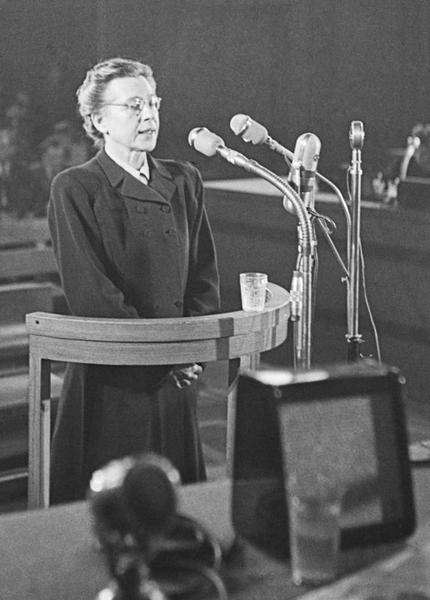
Milada Horáková gives her closing statement in a Prague courtroom, 1950. “My actions were conscious and deliberate, and I wish to take full and complete responsibility for them," Milada Horáková said in her closing statement to the court. "I will accept, with resignation, the punishment that shall be decided for me.” On June 8, 1950, the judges delivered a guilty verdict for “treason and conspiracy against the state”. Milada Horáková and three others were sentenced to death. Her daughter Jana said later, "I think my mother was a formidable opponent of the communists from the very beginning, even while she was still serving
as a member of Parliament. First they tried to win her over, and when that failed they decided to silence her."' Prominent people appealed to the Communist
government to spare her life, including, Winston Churchill, Bertrand Russell, Eleanor Roosevelt, and Albert Einstein, but the court remained unmoved. Milada's last
wish was to see her daughter Jana and her sister, who were allowed to visit the night before her scheduled execution. I go with my head held high, she said. At dawn on June
27, 1950, in the backyard of Prague’s Pankrác prison, she was executed – the only woman to be sent to the gallows by the regime. She did not die an easy death, a noose tightened around her neck, as her last words faded. “I’m falling… I’m falling; I lost this fight but I’m leaving in an honorable way. I love this country, I love its people; do build prosperity for them. I don’t feel any hatred towards you. I wish you well, I wish you well…” Under the regime in Czechoslovakia in 1950, hanging was not a quick death. The convicted was not dropped from a scaffold to die of a snapped neck. Milada Horáková fought for 13 minutes, before dying by slow strangulation. She left a letter for Jana, which did not come to light until after November 1989 when demonstrations toppled 41 years of communist rule in Czechoslovakia. “The reason was not that I loved you little; I love you just as purely and fervently as other mothers love their children. But I understood that my task here in the world was to do you good … by seeing to it that life becomes better, and that all children can
live well."
Authorities cremated Milada Horáková's remains, but never returned her ashes to her family. To this day no one knows where they are.
Like my article today? Forward this email to share with family and friends.
Sources https://www.fembio.org/english/biography.php/woman/biography/milada-horakova https://english.radio.cz/milada-horakova-8070014
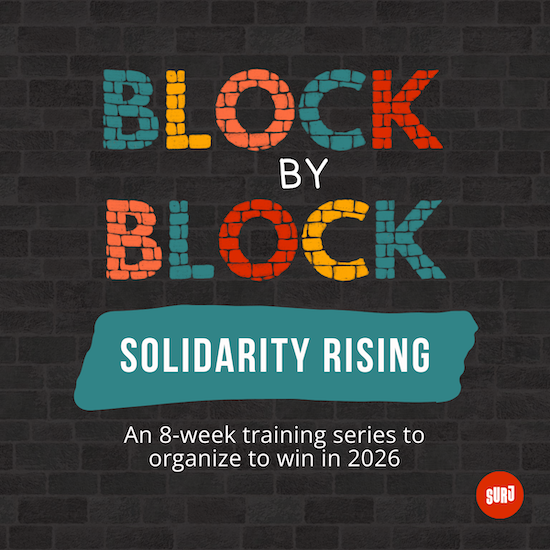
SURJ has a plan and a strategy to fight for American democracy. Do you?
Follow me on social media
This newsletter is a reader-supported publication. To support my work, consider becoming a paid subscriber.
Read
a great book? Have a burning question? Let me know. If you know someone who might enjoy my newsletter or books, please forward this e-mail. I will never spam you or sell your email address, you can unsubscribe anytime at the link below. To find out more about my books, how I help students, teachers, librarians and writers visit my website at www.MaryCronkFarrell.com. Contact me at [email protected]. Click here to subscribe to this newsletter. |
|
|