March 6, 2026 Hello , It's Women's History Month. Did you know it's one of the few designated months that requires a presidential proclamation every year? Donald Trump came through for us and signed his name. It feels like a sham coming from a man whose actions disrespect women in so many ways. No worries, women will come through for ourselves, as we have since the beginning of time. In big ways, and small, we're there for each other. I celebrate women's history all year round, thanks to you! Writing is no good unless somebody reads it. I'm deeply grateful for your time and
your emotional and financial support. I love telling these women's stories and I couldn't do it without you! History is always relevant to current events. I used to hint at these correlations, but as issues become more urgent, I'm often intertwining my stories of history with the day's news. I hope that doesn't put you off. I've always written from my heart and my heart is
breaking.
Good News, Bad News, Photos you'll love
You'll get the bad news first today, and then I'll tell you about Grace Caudill Lucas, a single woman raising two kids in the Great Depression, when
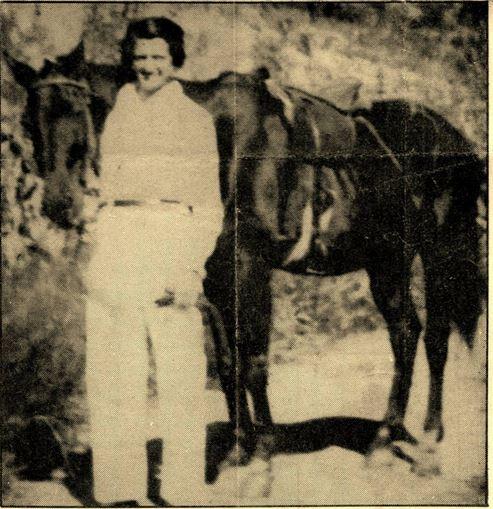
"times were hard, so hard you couldn't hardly crack them." She and a horse named Bill carried treasure to families who had it even worse than she did. Her guts and determination helped build the historical bedrock that supports librarians on the front
lines today, women fighting bigotry to get books in the hands of kids.
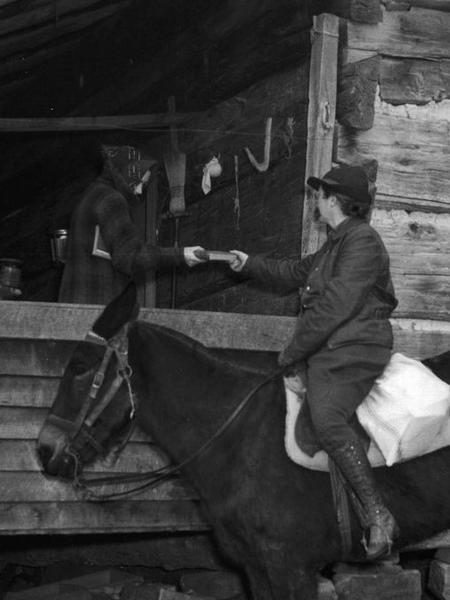
Grace Caudill Lucas with Bill, Lee Country, Kentucky,
1935. Last week, House republicans introduced legislation banning LGBTQ+ books from all public schools. Stopping kids from reading about LGBTQ+ does not stop them from being LGBTQ+. If books worked like this, we could end violence and hunger by forbidding people to read about them. According to PEN America, public schools nationwide instituted nearly 23,000 book bans in since 2021, a number never before seen in the life of any living American. I know, I know. We're bombing Iran, treating immigrants like animals, taking food out of the mouths of poor kids and stripping away health insurance from our most vulnerable
citizens—and I want to talk about books. It's all connected, it's all designed to make us feel overwhelmed and helpless. Bear with me, the good news is
coming. The censorship of young people's reading choices is mobilized by small groups in nearly every state. It predominantly targets books about race and racism or
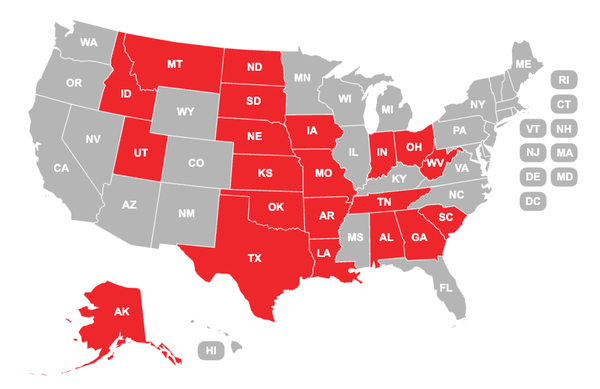
books featuring individuals of color, LGBTQ+ people and topics, as well those for older readers that have sexual references or discuss sexual violence. Tops books banned in 2025 Florida, which leads the country in book bans, passed HB 1069 in 2023 empowering a single parent or resident to object to books in a school and streamlining the process of removing them while disregarding US Constitutional obscenity standards and input by librarians and school boards. School districts, afraid of litigation, are preemptively removing books, shrinking student access to diverse histories, voices, and experiences. In 2024, parents, authors, and publishers challenged the law in court; a judge ruled in their favor, but Florida is appealing. Should Florida prevail in this case, at least 21 states are poised to pass similar laws.
Map shows in red the states considering stronger censorship laws. In the 2024-25 school year, PEN American documented 6,719 book bans across the country. If you're a reader you will have read some of these books and many others
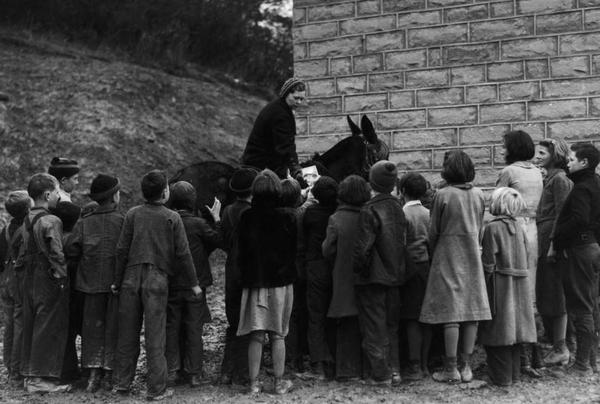
will be familiar to you. For instance, The Bluest Eye, by Toni Morrison was required reading in high school English class for one of my children. Check the list. I promised you pictures. Look at these Kentucky school children greeting the woman who just arrived with her saddle bags full of books. She'd leave two or three for the students to share until she returned two weeks later.
Children greet the “book woman,” 1940. Kentucky Libraries and Archives Above, I mentioned Grace Caudill Lucas, one of at least 1,000 women who worked for the Works Progress Administration in the 1930s delivering reading material to isolated
families in the Appalachian Mountains of Kentucky. The Pack Horse Library Project helped increase both employment and literacy in the region. "'Bring me a book to read,' is the cry of every child as he runs to meet the librarian with whom he has become acquainted," wrote one Pack Horse Library supervisor. "Not a certain book, but any kind of book. The child has read none of them."
A man reading to two small children, c. 1940. Kentucky Library and Archives Grace's husband left when her son Richard was two and her daughter only a month old. "We had enough to eat," she said. "we had
our own hogs and our own cow but many of a night my children and me went to bed with just milk and bread." She worked a sewing job with the WPA for three
years, then in 1933 Grace heard about the library project, applied and was hired. Her son Richard Overbee remembers it well. "She'd
get up every morning about 4:30, feed me and my sister and take us to my grandma's till she got home at night. Made a dollar a day. She was glad to have it. She bought groceries and things that we'd never had before." Grace delivered books three days a week for $28.00 a month, about $665 in today's dollars. Her expenses ran to renting a horse for 50 cents a week and feeding him, plus keeping herself in boots and, unusual for women of the time, pants.
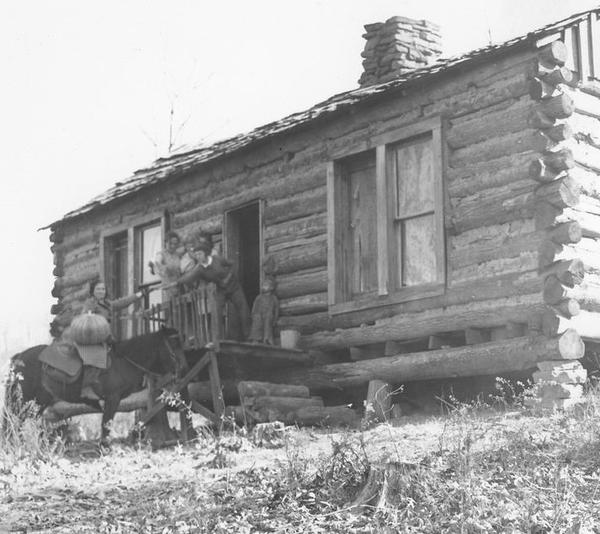
Front porch delivery, c. 1940. Kentucky Libraries and Archives The Book Women or Pack Horse Women, as they've come to be called, carried up to a 100 books and periodicals in two saddle bags and rode up to 120 miles a week on horse or mule. Part of
the year, they rode out before dawn and returned after dark. An article in the December 11, 1938, Louisville Courier-Journal quoted a mother asking the librarian to
leave only one book because "the young 'ens fight over them so...I'll just keep it myself and me or Sam will read it to them." She recounted one time her kids made such a ruckus over the books her husband had to sit right down where he was plowing and start reading. The librarians covered a 10,000-square-mile portion of eastern Kentucky where the Depression hit worse than anywhere in the country. Jobs, food and education were scarce. About 31 percent of adults couldn’t read and by 1933, unemployment hit 40 percent. The traveling librarians came from the Appalachian communities themselves, but often had to earn people's trust. But once the mountain people got a book in their hands, they wanted more.
A pack horse librarian at an isolated mountain house, carrying books in saddle bags and hickory baskets,
year unknown. University of Kentucky Libraries Special Collections Research Center. Far from highways, cities and towns, no paved road or gravel
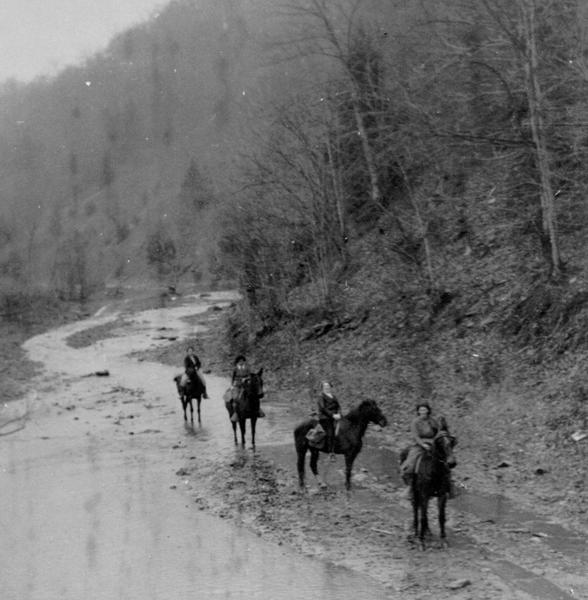
roads led to remote settlements in the Cumberland Mountains. Grace followed deer paths, rocky stream beds and ravines. She urged her horse up hillsides, down steep trails and across creeks. One librarian joked her horse had shorter legs on one side in order to keep to the mountainside paths. Whatever the weather, Grace and the others kept
to their mission. Later she told of snow drifts, sleeting rain that covered her with ice crystals, her shoes frozen to the stirrups and fording waters so deep it almost drenched the saddlebags of books.
Pack horse librarians start down Greasy Creek to remote homes, date unknown. University of Kentucky Libraries Special Collections Research Center. People requested books they wanted and the book ladies tried to get them. Readers wanted nonfiction about Kentucky history, people in other countries, the Bible and western cowboy stories. Magazines became as popular as books, especially collections of recipes and periodicals relating to
machines, tools or making things. The program always needed more books because the federal government paid the salaries but no money for reading material. People coast to
coast sent books and they were read until they fell apart and then the book ladies mended them and put them back in circulation. A big part of the load was always children's
books popular with the kids and adults who had read much since they left school and big big print is easier for them to see. Kids sometimes read to their illiterate parents. If no one in the house could read, the women often got down from their saddles and read aloud to kids and adults before resuming her trek. The women followed scheduled routes across 63 counties, and if families could not be reached on horseback, they finished their deliveries on foot. One hiked her 18-mile route when her mule died.
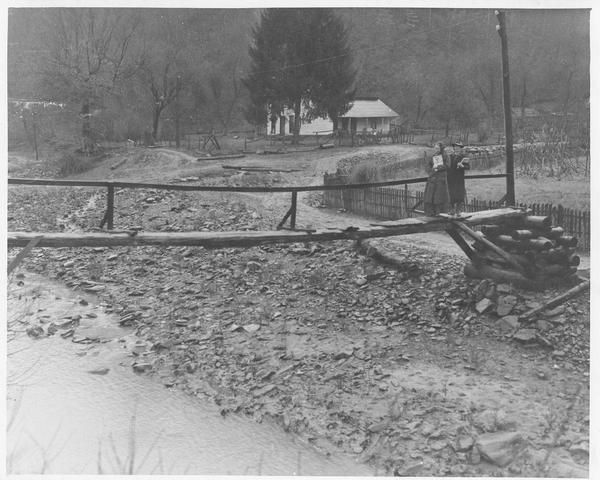
Pack horse librarians cross a log bridge to reach home used
as a distribution center for a mountain community, year unknown. University of Kentucky Libraries Special Collections Research Center. Interviewed for a newspaper article when she was 83, Grace remembered some homes she visited were so isolated she was the only regular visitor. And there was the mother of a big family with scarcely enough food to go around who always insisted she stay for a meal. I didn't want to eat because I thought I'd be taking something away from the children but she would make me eat. I've never forgotten. The WPA stopped funding the program in 1943 when American workers turned to the war effort. The staunch Pack Horse Librarians had circulated books to approximately 100,000 rural Kentucky families, young and old swept up in the power of stories.
Like my article today? Forward this email to share with family and friends.
Librarians today are just as tough as the women who made such a difference in Depression Era rural Kentucky. Take Amanda Jones of Livingston-Parish, LA. After speaking against censorship at a public school library board meeting, she was accused of being a pedophile and received death threats. Her credibility as a 24 year middle school educator was attacked, and people she had trusted turned against her. She fought back.
They picked on the wrong woman. "They published my name and said that I was fighting hard to “keep sexually erotic and pornographic materials in the kids’ section” of our public library. "They identified me as a school librarian and questioned what kind of nefarious influence I had over 6-year-olds. They posted a picture of me with a target around my head." The abuse turned Amanda into a powerful campaigner against censorship legislation. She founded two organizations to battle censorship In Louisiana. She also sued her harassers for defamation. After losing
they appealed all the way to the Louisiana Supreme Court, which ruled in Amanda's favor three weeks ago. That Librarian: The Fight Against Book Banning in
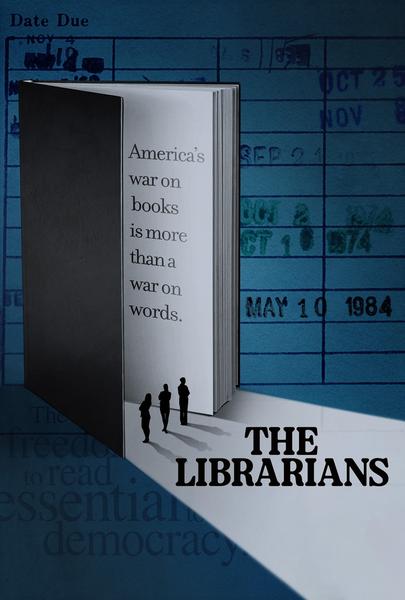
America is her NYT Bestselling memoir sharing the emotional pain of being targeted and about her legal journey. The book outlines step-by-step how to deal with people who attack you, how to fight censorship, how to support your public library, and how to form alliances. Amanda is not fighting alone. Check out what The Hollywood Reporter calls “A different kind of superhero
movie”, The Librarians is a powerful documentary about
American book bans — and the heroes who fight them.
Follow me on social media
This newsletter is a reader-supported publication. To support my work, consider becoming a paid subscriber.
Read
a great book? Have a burning question? Let me know. If you know someone who might enjoy my newsletter or books, please forward this e-mail. I will never spam you or sell your email address, you can unsubscribe anytime at the link below. To find out more about my books, how I help students, teachers, librarians and writers visit my website at www.MaryCronkFarrell.com. Contact me at [email protected]. Click here to subscribe to this newsletter. |
|
|